The English Edition — Coming Soon
Some minds are too loud to ignore.
From bestselling Israeli novelist and master copywriter Dalit Orbach comes a haunting, razor-sharp novel about the unbearable gift of hearing what everyone else keeps silent.
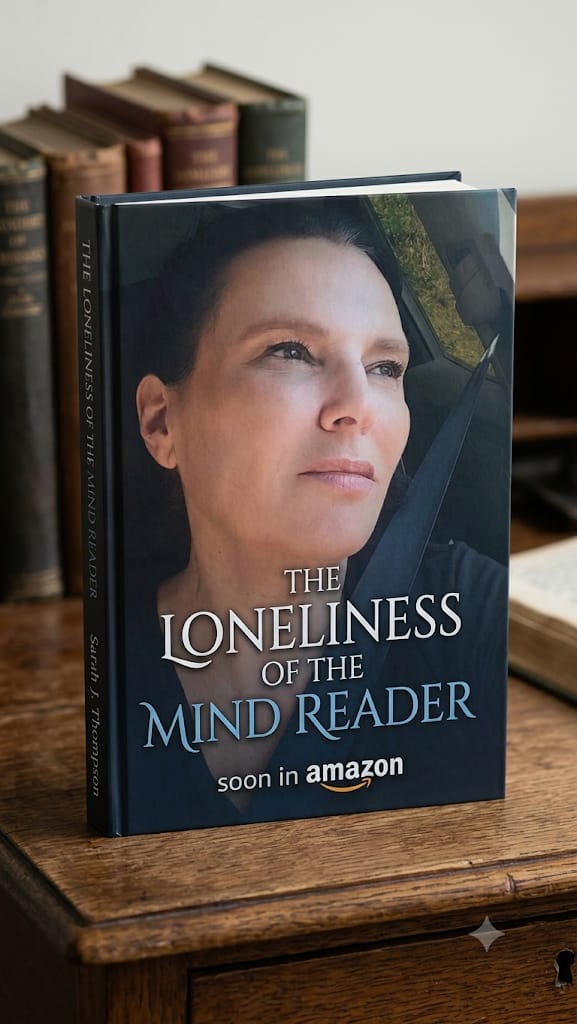
The Story.
Neri has heard everything since the day he was born. He hears the things left unsaid; the things people hide even from themselves. Neri was born with the terrifying and wondrous ability to read minds. "I know more than anyone else," Neri says. "I know so much, yet I want to know so little. And anyone who says knowledge is power—I have a bone to pick with them."
Soon enough, Neri realizes he is alone against the world. He is exposed to his mother's thoughts about another man, discovers his father's broken heart, and knows his sister is loved far more than he is. When a schoolmate is accused of murder, Neri goes to the courthouse to see a killer up close. A chance encounter with a lawyer leads him to reveal his abilities, and Neri becomes the secret weapon securing acquittals for the innocent.
But suddenly, the tables turn: Neri becomes the prime suspect in a serial murder case. In custody, he meets the only woman in the world who can hold up a mirror to him and help him discover his true self. Together, they embark on the most fateful and decisive battle of all: the fight for Neri's innocence.
"The Loneliness of the Mind Reader" is the fourth novel by Dalit Orbach, a seasoned copywriter and screenwriter. Her previous works include "Confetti", "Hedgehogs" (Kipodim), and "And This is the End".
Read the First Words of the English Edition.
An exclusive sneak peek into the upcoming English edition.
I was born to parents who didn't want me. They never said so, of course, but it was written across their foreheads in clear furrowed lines, and I learned to read very early.
Some people spend their whole lives wondering how loved they are compared to their siblings. I never wondered. It was obvious my sister was loved more. To know exactly by how much, I invented the "Mili-Hug" index, which measured the amount of love in a parental hug. Over time I came up with other measures too, with better names, all designed for a single purpose: to grasp, quantify, and feel at least a little of the most essential love in the world. It's not that I didn't know. But for the record, I had to measure. And I say "for the record" because I'm an obsessive recorder. I document everything. I have a thick notebook, crammed with pages, where I draw graphs, score columns, and fill in details with painstaking care. From childhood, I decided I was this kind of scientist, someone who examines and tests things, and because I was so very different, that angle suited me.
My father was a thin man with a gloomy face and dispirited, coal-black eyes. Inside those eyes was a ragged farmer hunched over a rusting plow, turning the soil of eternal fallow fields. That was what my mother saw whenever I secretly watched her searching his gaze for reassurance and not finding any. He worked for the police in a clerical position, after a heart murmur slammed the door on his chance at operational training and stripped the heavy gun from his belt. My father could, in theory, have had a sensible path of advancement, even on the tiled floors of the regional station, but it never seemed in a hurry to lay itself out beneath his feet. In fact, the longed for promotion wasn't interested in coming at all, and the frustration in his forward-fixed gaze drew a thin, beautiful black line along his lashes.
In his first year of life, a baby looks like his father. The man sees himself in his son and understands that his wife has been faithful to him and that his offspring really is of his seed. This resemblance is critical; evolutionary biology made sure of it. That confirmation helps the baby survive, keeps him protected, fed, and safe. After a year, even if the baby's features change, the emotional bond has already formed. I didn't resemble my father in any way. Not even on my first day.
Be the first to know.
The English edition is currently in translation. Drop your email below, and we'll let you know the second it hits the shelves. You can also leave a message for Dalit.
The Literary Background.
Before reaching the English literary world, Dalit published 7 highly acclaimed bestsellers in Israel. Here is a glimpse into her literary history.
Book 8 (Work in Progress)
Dalit's next novel is currently in the works. The sharp language, psychological depth, and impossible-to-put-down storytelling you expect—arriving 2026.

 2019
2019Soul of Masks (Nefesh Masechot)
A brilliant psychological plot that penetrates deep into the minds and scars of its protagonists.

 2014
2014A Hell of a Story (Chatichat Sipur)
A sweeping novel, written in Dalit's characteristic sharp language that makes it impossible to put down until the last page.
 2011
2011Too Much Nina
Relationships, human weaknesses, and sharp humor in a story that never ceases to surprise.
 2010
2010The Loneliness of the Mind Reader
When a copywriter who makes a living reading minds writes about someone who actually reads them.
 2007
2007And This is the End
A shocking story that grips the reader deep in the gut, exactly the way Dalit knows how to do.
 2005
2005Hedgehogs (Kipodim)
A massive bestseller. A story about thorns, getting closer, and the way we protect ourselves from the world around us.

 2002
2002Confetti
Her debut novel that marked the transition from the short slogans of the advertising world to the deep, long breath of literature.